Choosing Copenhagen bases: walkability, transit, and vibes
I nearly booked the first hotel that said “city center,” then realized Copenhagen’s version of “central” can still mean a 25-minute walk in wind and drizzle—fine at noon, annoying at 10 p.m. when you’re tired and just want food nearby.
For a 2–4 night break, I’d anchor your base around two questions: can you walk to at least one major draw (Nyhavn, Tivoli, a big museum) and can you jump on the Metro or S-train without a complicated transfer? Airport and rail links matter more than you think when your schedule is tight.
The trade-offs are predictable: postcard-pretty canal areas cost more and get loud on weekends; nightlife corridors save time on dinners but can steal sleep; quieter residential pockets feel local, but you’ll “pay” in extra rides. Decide what you’re willing to spend—money, minutes, or quiet—then pick accordingly.
Indre By: first-timers near top sights

The moment Indre By clicked for me was after dinner, when the wind picked up and I realized I could still be “home” in ten minutes on foot—no app-checking, no platform roulette, just a straight walk through well-lit streets. For first-timers on a short break, that simplicity is the real luxury here: you’re close enough to string together Nyhavn, the pedestrian core, major museums, and quick detours without turning every outing into a transit decision.
What works well is the default efficiency: you can start early, duck into a museum when the weather turns, and still make it back to reset before an evening plan. Indre By can feel like Copenhagen on fast-forward, especially on weekends, with busy sidewalks and restaurants that fill up before you’re ready to eat. If you’re mid-range budget, look for streets that sit a few blocks off the heaviest pedestrian routes; you often lose “views” but gain quieter nights and slightly better value without sacrificing walkability.
Nyhavn & Christianshavn: canals, charm, pricier
I tested the “stay by the water” idea by walking through Nyhavn around dinner, and it was exactly as expected: gorgeous, busy, and priced like it knows you’re on a short list of first-time highlights. The upside is immediate—you can step outside and be at the canal, the harborfront, and central sights within minutes, which is hard to beat when you only have 2–4 nights. The downside is that the same convenience attracts crowds; on weekend evenings the foot traffic and terrace noise can linger later than you’d think, especially if your room faces the canal.
Christianshavn is the more workable version of the canal fantasy for many mid-range budgets: you still get water, bridges, and that “Copenhagen postcard” feeling, but with a bit more breathing room once you’re a few streets back. What doesn’t always work is the premium creeping in anyway—hotels and apartments here can still be expensive—and the micro-location matters: be close to a Metro stop if you want quick hops to Tivoli or the main station without turning every return into a long, windy walk over bridges.
Vesterbro: dining, nightlife, easy station links
I hesitated on Vesterbro because “cool and lively” can be code for “you’ll hear it.” But the first time I came in via Copenhagen Central Station and realized my hotel was a quick, flat walk away—with buses, S-trains, and the Metro all clustered nearby—it felt like the most time-efficient base for a short trip.
What works well is the everyday convenience: you’re close to Tivoli, you can pivot plans fast if the weather turns, and dinner is rarely a research project. Vesterbro’s food scene is dense enough that you can eat well without crossing town, which matters when you’re juggling museums, canals, and an early start the next day.
On Friday and Saturday nights, pockets near the busiest bars can run loud later than you’d expect, and some streets feel more “out” than “in.” If you want the station links without the soundtrack, aim a few blocks off the nightlife lanes—close enough to walk home in ten minutes, far enough that you’re not negotiating crowds outside your door.
Nørrebro & Østerbro: local feel, parks, metro access
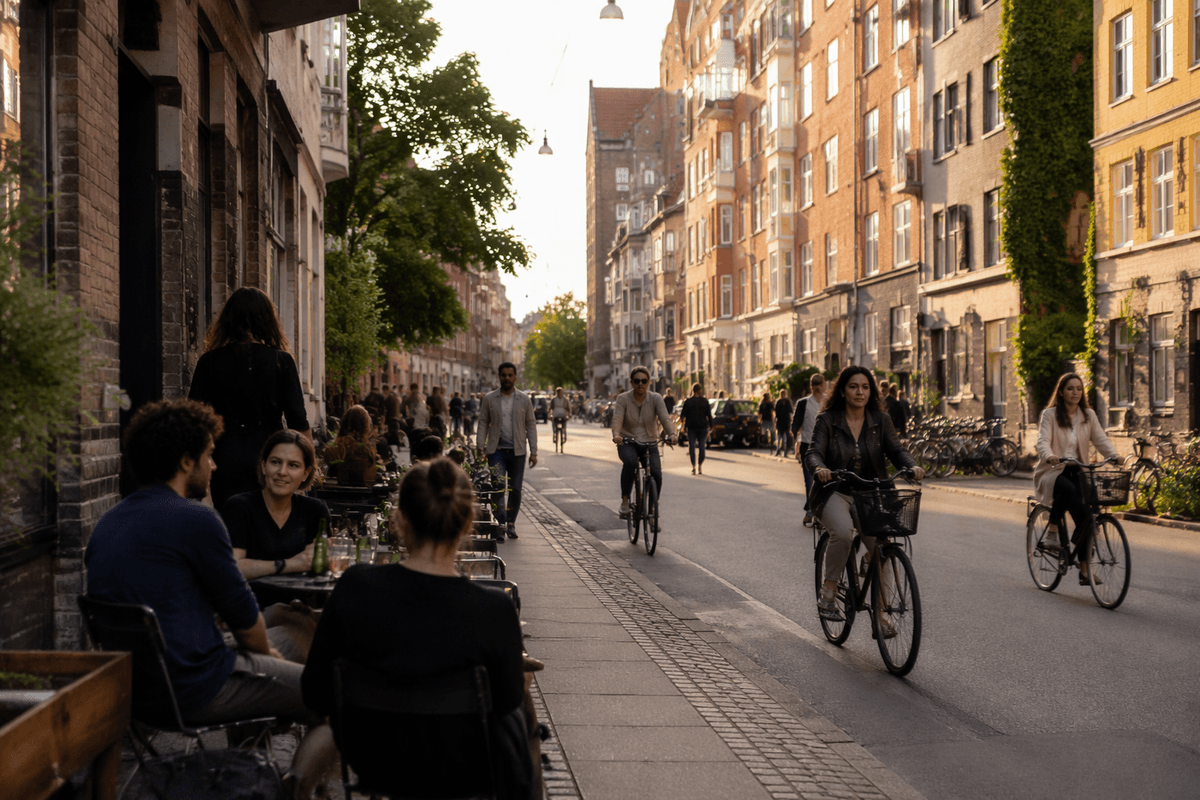
I felt the difference the first time I crossed into Nørrebro: the streets got a little less “tour itinerary” and a little more “this is where people actually live,” which is great—right up until you realize you’re now doing a Metro check before most big sights.
Nørrebro works well if your priority is food variety, casual cafés, and a local evening vibe without paying Indre By prices. You’ll still reach the center fast if you’re near an M3 Cityringen station, but the constraint is that “close on the map” can mean a longer walk to the platforms than you’d expect, especially after a full day out. Østerbro is the calmer sibling: greener, quieter, and anchored by parks like Fælledparken, with solid Metro access if you pick your stop carefully. The trade-off is energy—nights here are easier for sleep, but you may spend a few extra minutes riding back for dinner if you want that dense, spontaneous restaurant crawl.
If you’re only in town 2–4 nights, choose these neighborhoods when you value downtime and local rhythm over being able to walk home from Nyhavn—then be strict about staying within an easy walk of a Metro station.
Quick pick checklist: budget, noise, commute tolerance
The last decision I make before booking is the unglamorous one: what do I want to “pay” with—cash, sleep, or commuting minutes—because Copenhagen makes you pick at least one.
If you want the easiest first trip with the fewest transit decisions, pay for Indre By (or a few blocks back from it) and treat walkability as your time-saver. If you want canals without peak pricing, choose Christianshavn but only if you’re within an easy walk of a Metro stop; otherwise those bridge walks add up at night. If station links and “no-planning dinners” matter most, Vesterbro is the efficient bet—just avoid rooms on the loudest bar streets if you’re traveling over a weekend. If you’d rather sleep well and reset between sights, pick Østerbro (or a Metro-adjacent slice of Nørrebro) and accept a few extra rides in exchange for calmer evenings.
If your base is more than a 10-minute walk to a Metro/S-train stop, you’ll feel it on a 2–4 night trip—especially when the weather turns and you’re heading home tired.