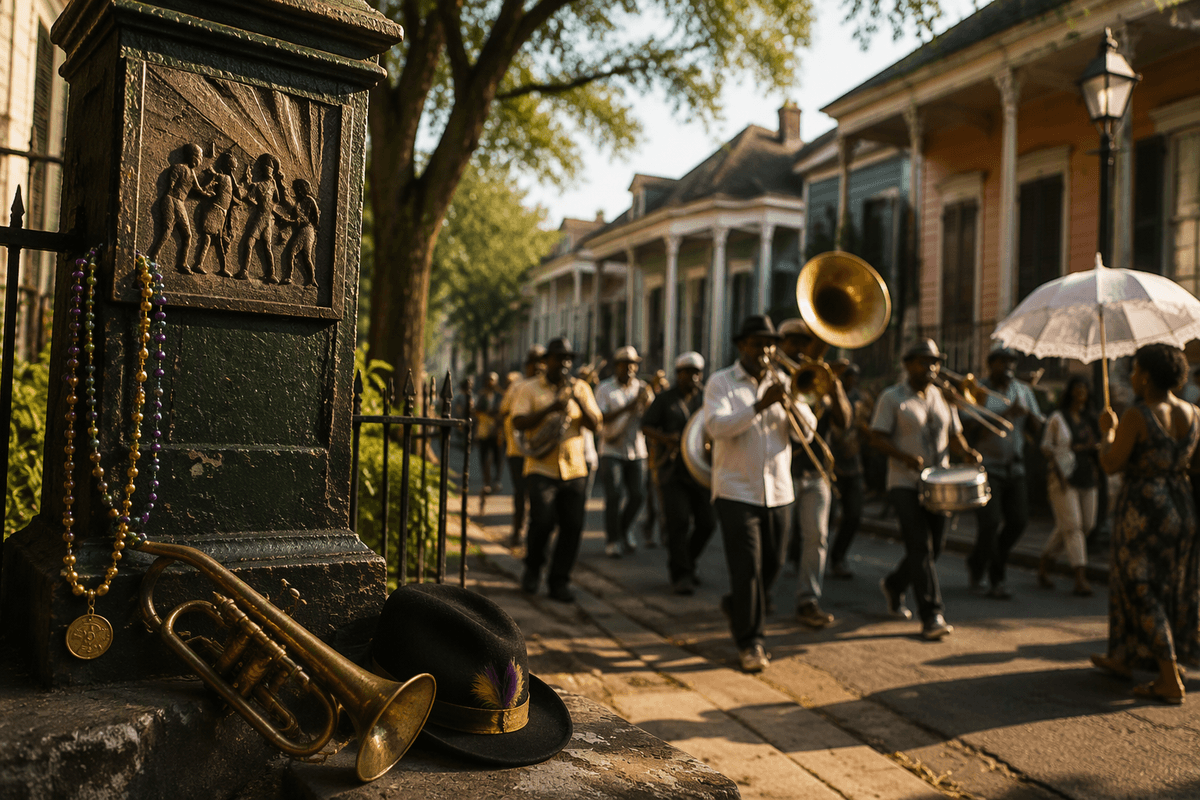
Jazz beyond Bourbon Street: what you’re missing
The first time I stood on Bourbon Street with a brass band blaring from three directions, I couldn’t tell what was “New Orleans” and what was just noise designed to keep me spending. It works if you want easy access and zero planning, but it can flatten the music into background entertainment—loud, crowded, and oddly interchangeable from door to door.
What you’re missing is the quieter map: jazz as neighborhood memory, not just nightlife. That often means Tremé sidewalks, community halls, and small museums where the stories land with more weight than a cover charge. The catch is it asks more of you—earlier starts, a bit of walking, and occasionally arriving to find a place closed or an event moved.
If you’ve only got 2–4 days, treat Bourbon as a single evening, then spend the rest following roots and living rituals. You’ll trade convenience for context, and that’s usually the better bargain.
Trace the roots in Tremé and nearby streets
I hesitated at the edge of the Quarter—do we really need a ride for Tremé, or is this one of those “it’s close on the map, not in your feet” walks? In daylight, it’s an easy, grounding transition: start near Rampart Street, cut into Louis Armstrong Park, and stand at Congo Square long enough to let the traffic fade. It’s not a performance on demand, and that’s the point; if you come expecting a bandstand moment, it can feel oddly quiet.
From there, I like to keep it simple and human-scaled: wander toward St. Augustine Church and the blocks around it, reading the neighborhood as you go—porches, murals, corners that show up in liner notes if you know what to look for. The limitation is timing: midday heat can turn this into a slog, and at night the same route feels less comfortable for first-timers. If your energy is dipping, shorten the loop and save your legs for later music.
Museums, archives, and cultural centers to visit
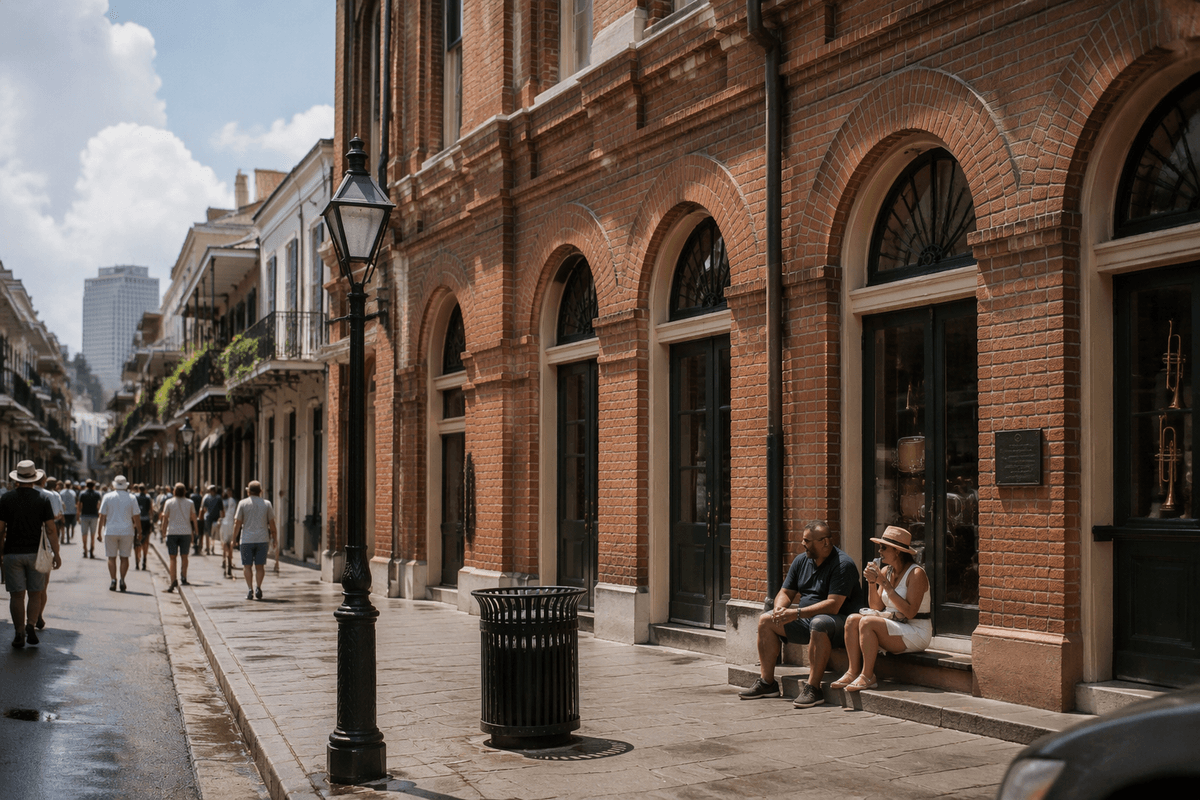
I almost skipped museums entirely—New Orleans felt like a “stay outside” city—but the midday heat (and my legs) made an air-conditioned stop feel less like surrender and more like strategy. If you want one place that connects the street-level story to names and dates, the New Orleans Jazz Museum at the Old U.S. Mint is an easy slot-in from the French Quarter edge. It’s not an all-day sinkhole, but it can be uneven depending on what’s on display, so I treat it as a 60–90 minute reset before the next walk.
For something more community-rooted, the Backstreet Cultural Museum in Tremé hit harder—less polished, more personal, and not designed around crowd flow. The limitation is that it’s small and sometimes feels like you need to slow down and read the room; it’s not a place to rush through between cocktails.
If you’re deciding between “more artifacts” and “more context,” the Historic New Orleans Collection can be a calmer, free-feeling option near the Quarter, while the Ogden Museum’s music programming can be great when it lines up—just don’t count on it without checking hours and schedules that day.
Catch living traditions: second lines and rehearsals
The first time I tried to “catch a second line,” I learned the hard way that you don’t casually stumble into one on a tight timeline—you either build your day around it or you miss it by three blocks and a lot of trumpet echoes. The easiest way to avoid wasting an afternoon is to check a local listing the morning-of (WWOZ’s Takin’ It To The Streets is the one people actually use), then commit to arriving early enough to see the start, not just the tail end.
Once you’re there, the friction is real: it’s hot, it’s loud, streets can bottleneck, and you’ll be on your feet longer than you expect. If you’re trying to keep it walkable, pick one neighborhood to orbit and let the parade come to you instead of chasing it like a scavenger hunt—following too aggressively can feel intrusive fast, and it turns “community tradition” into “tourist sprint.”
If a full second line doesn’t line up, rehearsals can be the cleaner fit: shorter, often indoors, and easier to pair with dinner. They’re less cinematic than the street, but you’ll hear the working mechanics—stops, cues, the rhythm getting tightened—without the crowd stress (though you may trade that for a cover charge and limited space).
Support the scene: records, food, and local makers
I had a moment where I almost treated “supporting the scene” as a nice extra—until I realized how quickly a day can disappear into free listening. If you’re choosing where to spend actual dollars, a record store is a clean, low-effort way to do it: you get something tangible, and you’re not competing with a crowded room for a bartender’s attention. The only catch is baggage and time; flipping through bins is addictive, and vinyl is not friendly to a 2–4 day pack.
Food works the same way when you’re intentional. A corner plate lunch or po’boy shop near where you’re already walking can keep you in the neighborhood orbit without turning dinner into a cross-town mission. I try to spend close to the music—then tip like I mean it—because the “cheap meal” option stops being cheap when you’re paying for rides just to chase a famous address.
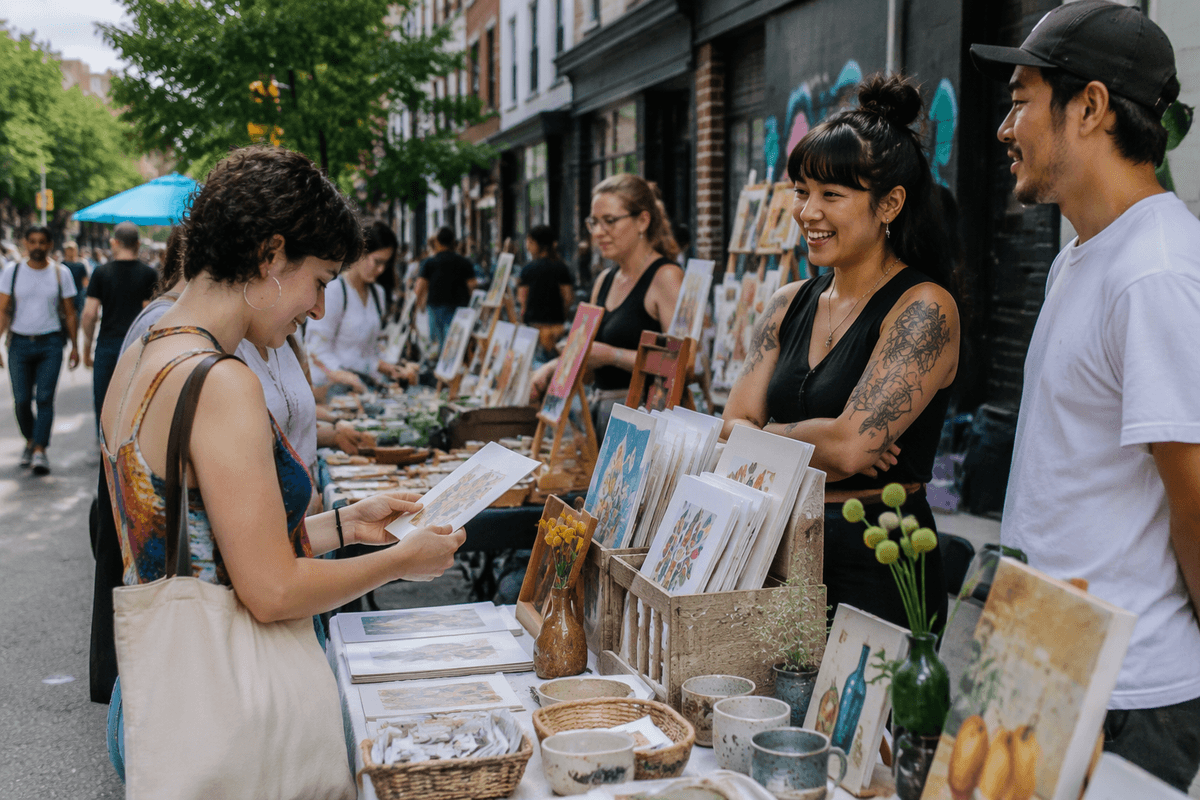
For local makers, I’ve had better luck with small art markets and museum shops than the souvenir corridors: fewer mass-produced jazz clichés, more pieces that feel connected to the city. It’s not always budget-friendly, but even one small print beats another novelty T-shirt you’ll forget by November.
Leave with a personal jazz trail—and respect
On my last night, I stopped trying to “do one more club” and instead scribbled a simple trail: a morning loop through Tremé, one museum stop when the heat got bossy, and one living-music anchor (second line if it happened, rehearsal if it didn’t). It sounds obvious, but the constraint is what makes it work—if you keep adding “just one more,” you’ll spend your final day in rideshares and decision fatigue, not in the neighborhoods that actually held your attention.
The respect part is mostly behavior, not vocabulary: pay the cover when it’s asked, tip like the music mattered, and don’t treat traditions as props for your camera. If a block or a moment feels like you’re forcing yourself into it, back off and reset—New Orleans rewards the visitors who move with a little patience. Leave with fewer checkmarks and a clearer sense of what you’d come back for.