Why These Remedies Seem Comparable at First
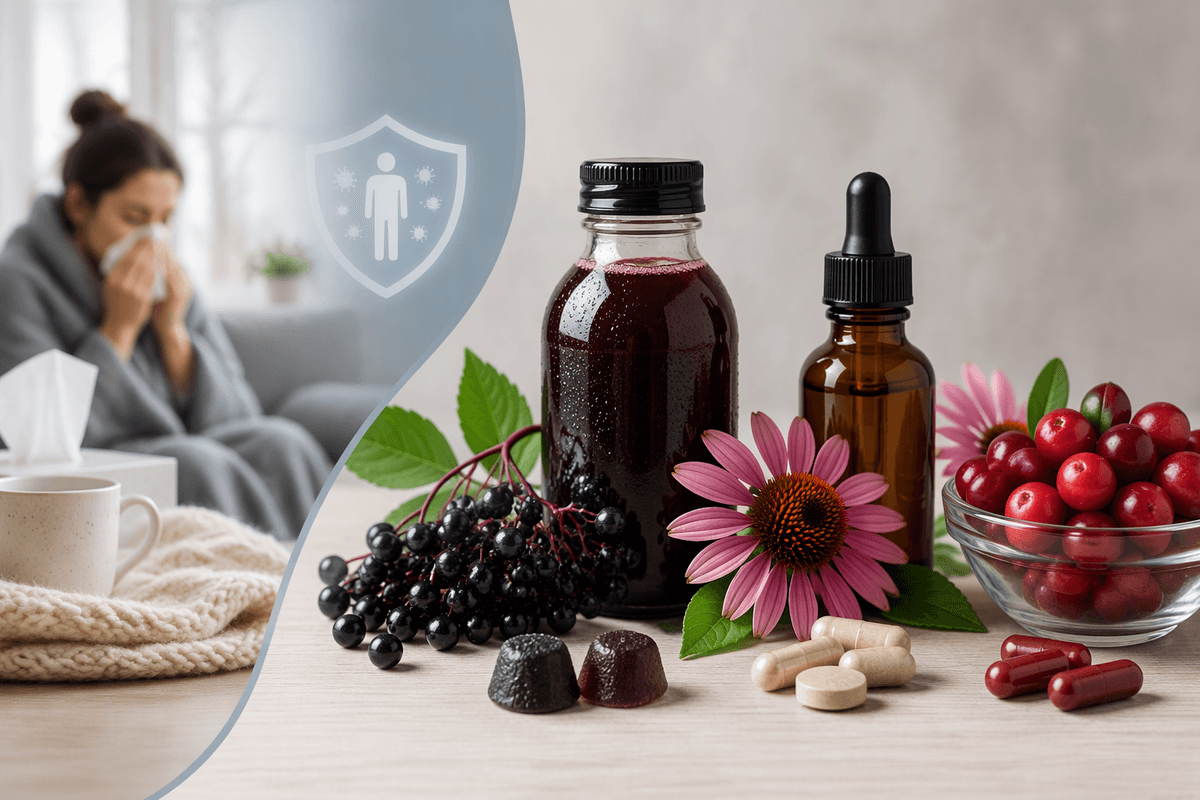
At the store, the choice can look almost effortless: elderberry gummies, echinacea drops, and cranberry capsules may all sit in the same “immune support” section, promising help during the months when coughs and fever seem to circulate everywhere. That shared setting makes them feel interchangeable, especially when the goal is simply to avoid getting sick or to recover sooner.
The comparison becomes less straightforward once the question is narrowed. Elderberry and echinacea are commonly discussed in relation to colds or respiratory symptoms, while cranberries are more often studied for urinary tract health rather than preventing a cold or influenza. Even among products aimed at respiratory illness, the preparation, dose, timing, and exact illness matter. A response after symptoms begin may not say much about prevention, and feeling better after one product does not establish that another will work the same way. The similar packaging can hide very different questions.
Elderberry’s Promise Depends on the Product
The bottle on the shelf may say “elderberry,” but that label does not guarantee a consistent remedy. Syrups, gummies, lozenges, and capsules can differ in the type of extract used, how concentrated it is, and how much active material reaches each serving. Added sugar or other ingredients may also make one product feel more noticeable than another. This makes personal comparisons difficult: a response to one preparation cannot automatically be applied to every elderberry product.
Some studies have examined elderberry after cold-like symptoms begin, while shoppers may be looking for daily prevention during flu season. Those are separate expectations, and evidence for one does not establish the other. Even a shorter illness may reflect the usual course of symptoms, rest, hydration, or several remedies used at once. Elderberry may seem promising in a particular situation, but the product, illness, and timing all shape what that experience can reasonably show.
Echinacea Brings Mixed Results and Expectations
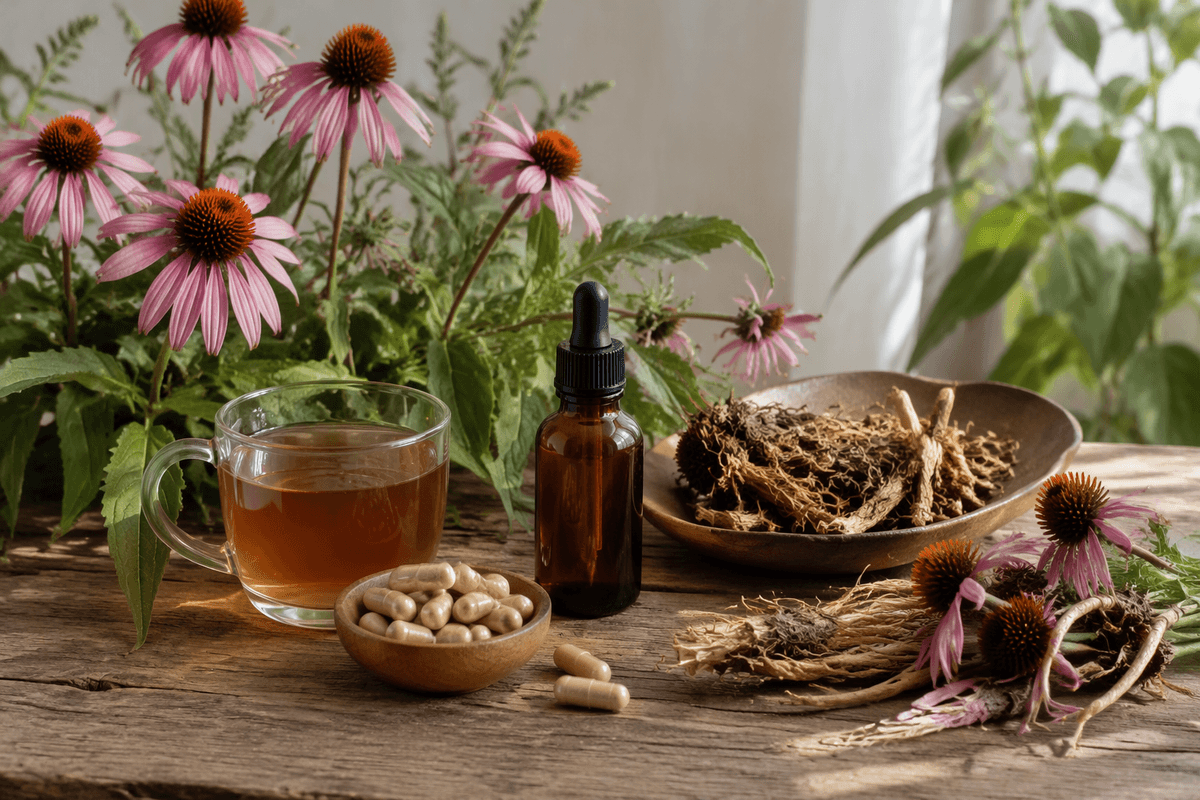
After trying an elderberry product, it can be tempting to treat echinacea as the next similar option, especially when both are described as seasonal immune support. Yet echinacea is not one uniform preparation. Different species, plant parts, extracts, and forms may be used, so results from one tea, tablet, or liquid cannot easily be applied to another. Even the expectation may change the experience: someone taking it at the first scratchy throat is asking a different question from someone using it every day to avoid illness.
Research on echinacea has produced mixed findings, with possible differences depending on the product and whether the goal is prevention or a shorter cold. A change in symptoms may also be difficult to separate from the illness’s natural course, sleep, fluids, or other treatments started at the same time. If echinacea seems helpful once, that can make future use feel convincing, but it still does not show that every preparation—or influenza rather than a common cold—will respond similarly.
Cranberries Belong to a Different Health Question
The cranberry capsules may look like another seasonal choice, but they usually belong to a different health question. Cranberry products are more often discussed in relation to urinary tract health, not preventing a cold, easing congestion, or shortening influenza. That distinction can disappear when all three products are placed under broad “immune support” language.
This does not make cranberries irrelevant; it means the expected benefit needs to match the reason for taking them. Evidence about urinary symptoms cannot be used to support a claim about respiratory illness, and a person who avoids a cold while taking cranberries cannot easily know whether the product made a difference. Timing, exposure to illness, and ordinary seasonal variation may explain the outcome just as easily. Treating cranberries as interchangeable with elderberry or echinacea can therefore create confidence around a question the product was not mainly studied to answer.
When a Reasonable Remedy Creates New Uncertainty
The uncertainty often appears after a reasonable choice seems to work. A person starts an elderberry syrup when several coworkers are ill, avoids symptoms, and begins to view the product as protective. Another takes echinacea at the first sign of a sore throat, improves within a few days, and assumes the remedy shortened the illness. These experiences are understandable, but they leave several details unresolved: whether exposure was limited, whether the illness would have stayed mild, and whether rest or other treatments mattered more.
A product may seem ineffective because it was started late, used inconsistently, or taken during influenza rather than a common cold. Different products sold under the same name may also make repeated trials hard to compare. Personal experience can help someone notice patterns, but it rarely separates prevention from coincidence or symptom relief from the ordinary course of illness. That uncertainty becomes especially important when broad marketing claims encourage one result to stand in for another.
What May Shape Different Responses Over Time

The same product may seem to work differently later in the season, even when the routine has stayed the same. One illness may be a common cold, while another resembles influenza, or symptoms may already have been developing before the product was taken. Sleep, stress, recent exposure, hydration, and other medicines can also influence how symptoms unfold. A remedy that seems more or less effective may therefore be getting credit for differences in the illness itself rather than for any change in its effects.
Judging the results becomes harder when use varies from one episode to the next. A daily capsule, an occasional syrup, and a product taken only after a scratchy throat appears are not being tested under the same conditions. Extract strength, serving size, and storage may differ, too, while stomach upset or an unpleasant taste may lead to missed doses. These details do not invalidate personal experience, but they make sweeping conclusions less reliable. Comparisons are more meaningful when the product, timing, symptoms, and other care remain reasonably consistent. Even then, a repeated response describes what happened under those particular circumstances, not necessarily what the remedy will do for others.
A Practical Way to Interpret the Evidence
When weighing one of these products, start by naming the exact question: Is the aim to prevent a cold, lessen symptoms after they begin, or address a different concern such as urinary health? Then check whether the product and preparation actually match that question. Elderberry syrup, echinacea tablets, and cranberry capsules should not be treated as interchangeable simply because they share an “immune” label.
It also helps to record when use began, which symptoms were present, how consistently the product was taken, and what else changed. Improvement may be encouraging, but it can reflect the ordinary course of a mild illness, while no improvement may reflect late use or a different infection. Product claims deserve the same practical caution: evidence for one extract, illness, or timing may not apply broadly. A reasonable interpretation is usually modest—this product seemed useful in this situation—rather than proof that it prevents illness or shortens every cold or influenza episode.